Water carries dissolved gases in it (oxygen, nitrogen, carbon dioxide), the same way a sealed soda carries dissolved CO₂. As long as the water is under steady pressure, the gases stay in solution and you don't see them.
But when water is forced through tight bends, or when there's a sudden pressure drop (which happens at every sharp turn), some of that dissolved gas comes out of solution and forms small bubbles. Same thing that happens when you crack open a soda: release the pressure, and the bubbles appear.
In a pool plumbing system, those bubbles get carried along with the water. Most of the time they cause no real harm. But there's one place where they cause big problems: the flow switch on a salt cell.
What actually goes wrong
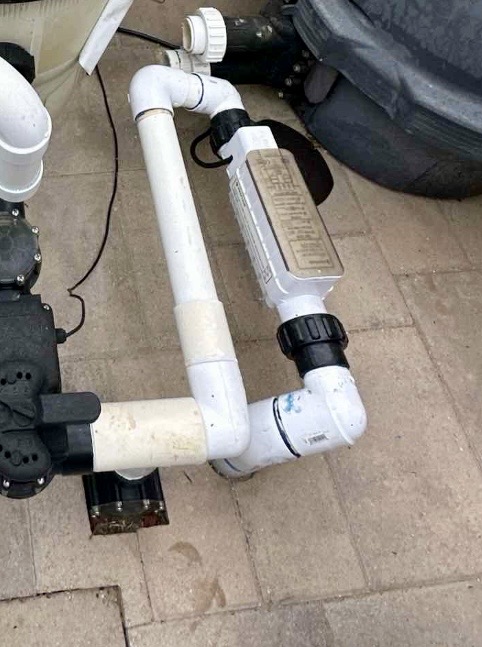
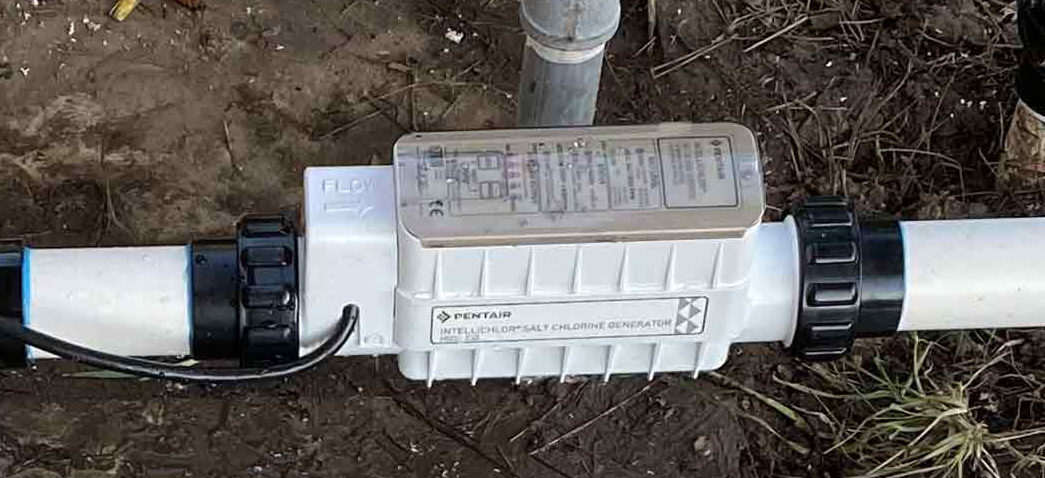
A salt-chlorine generator only runs when its flow switch detects moving water. If a 90-degree elbow is plumbed right before the cell, you can end up with a pocket of air sitting on top of the flow switch. The switch is essentially in a vacuum, doesn't engage, and the cell never turns on, even though water is moving fine through the rest of the system.
This is why the universal recommendation is never plumb a salt cell with a 90-degree elbow going straight into it. There should be at least a foot or so of straight pipe before the cell, to let any bubbles travel past the switch. If space is tight and a turn before the cell is unavoidable, use a sweep elbow (a long-radius bend) instead of a sharp 90. Sweep elbows generate far less turbulence, and far fewer bubbles.
It's a small detail. It's also the difference between a salt cell that works for six years, and one that gets blamed (incorrectly) for failing in one.