It rubs against the pipe walls, gets jostled by every turn, and the pump has to fight all of that to keep it moving. The total amount of fight required is called total dynamic head, or TDH. It's measured in feet (the same units you'd use to lift water vertically, because the math works out the same way).
Two things drive it
Pipe length. Longer plumbing means more friction. There's only so much water per minute you can force through a 2-inch pipe before the resistance climbs into territory that costs you.
Fittings. Every time the water has to make a turn, friction goes up. A standard 90-degree elbow adds roughly the friction of an extra 8 feet of straight pipe. If the plumbing has six 90-degree elbows in it (which is normal), that's 48 feet of equivalent pipe friction tacked onto the actual pipe length.
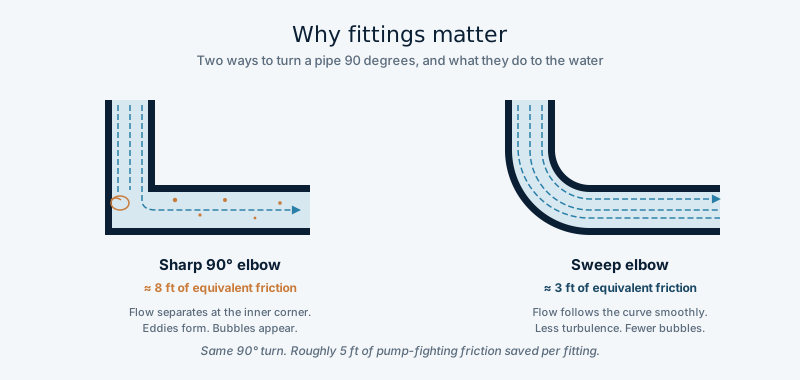
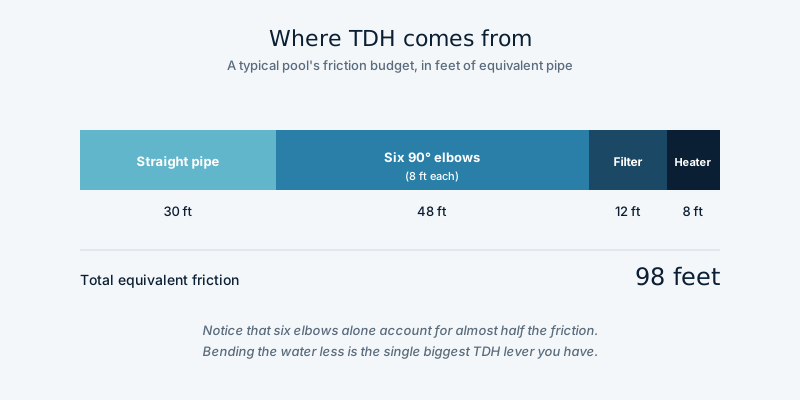
This is why we try to bend the water as little as possible. A pool plumbed thoughtfully (fewer turns, sweep elbows instead of sharp 90s, runs that don't take the long way around) has dramatically lower TDH than a pool plumbed without thought.
Why it matters in practice
Higher total dynamic head means the pump has to work harder for every gallon of water it moves. Think of it like driving. Coasting on a flat road costs almost no fuel. Climbing a hill costs a lot. The pump motor doesn't care whether it's pushing water through a clean 30-foot run or fighting six elbows and an undersized filter. It just runs harder, runs hotter, draws more electricity, and wears out sooner.
In real terms, lower TDH means:
- Less strain on the pump motor
- Lower electricity bills, every month, for as long as you own the pool
- Longer life on every valve, joint, and fitting in the system
- Better filtration, because the water actually gets to the filter at the rate it was designed for
This is one of the things we audit on every pool we take on. If the hydraulics are working against you, no amount of chemistry will fix what bad flow leaves behind.